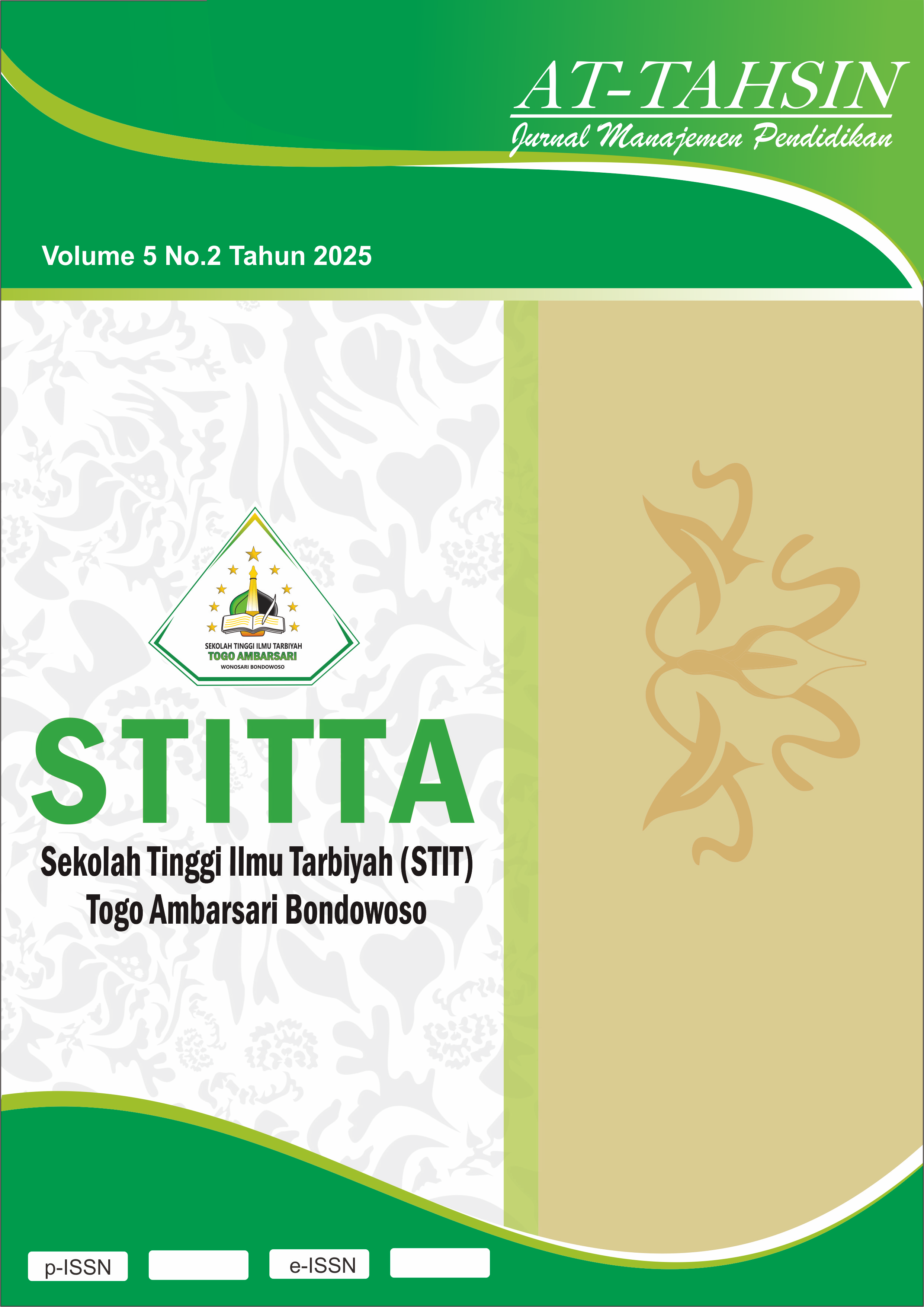
Cultivating Teacher Capacity for Quality Instructional Management: An Authoritative Leadership Approach
DOI:
https://doi.org/10.59106/attahsin.v6i2.470Keywords:
Teacher Capacity, Quality Instructional Management, Authoritative LeadershipAbstract
This study aims to examine how school principals deploy an authoritative leadership approach to cultivate teacher capacity for quality instructional management. Despite ongoing professional development efforts, many schools still struggle with suboptimal instructional management due to inconsistent pedagogical support and a lack of visionary, firm leadership guidance for educators. Utilizing a qualitative multi-case study design, this research explored the leadership dynamics across three high-performing secondary schools. Data were meticulously gathered through semi-structured interviews with principals and teachers, non-participatory classroom observations, and an analysis of instructional policy documents. The collected qualitative data were then analysed using an interactive thematic analysis model encompassing data condensation, systematic data display, and verification. The findings reveal that authoritative leaders successfully enhance teacher capacity by articulating clear, high-performance instructional standards balanced with strong emotional support. Principals foster pedagogical competence by establishing collaborative professional learning communities that encourage peer coaching. Furthermore, quality instructional management is achieved through regular, constructive feedback sessions that empower teachers to refine their teaching methodologies. The study demonstrates that clear structural guidance combined with intellectual stimulation inspires teachers to adopt innovative classroom management practices. Additionally, the authoritative approach builds teacher resilience, enabling them to effectively address diverse student learning needs. Future research should investigate the long-term impact of authoritative leadership on teacher capacity through a longitudinal mixed-methods approach across diverse geographical regions.
Published
How to Cite
Issue
Section
License
Copyright (c) 2026 Haidaratil Bararah; Izzatul Magfiroh, Revalina Anggun R, Muhammad Nuruzzaman, Mardiyah

This work is licensed under a Creative Commons Attribution-NonCommercial-ShareAlike 4.0 International License.